


Smarter Farming with AI: How Computer Vision and DefectGuard Are Transforming Crop Quality and Yield
Updated: Dec 17, 2025
Introduction:
AI in Agriculture: Using Computer Vision and DefectGuard to Improve Crop Quality and Yield.
Agriculture is rapidly evolving as farmers and agribusinesses confront rising input costs, labor shortages, climate uncertainty, and increasing quality expectations from global markets. Traditional farming practices—largely dependent on manual inspection and reactive decision-making—are no longer sufficient to meet these challenges at scale.
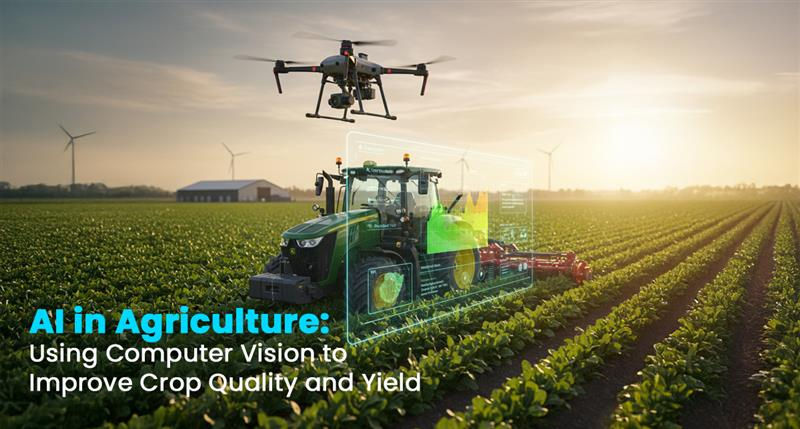
Artificial Intelligence (AI), particularly computer vision, is transforming agriculture by enabling machines to analyze visual data from crops, fields, and produce in real time. From early crop health monitoring to automated quality inspection after harvest, AI-driven vision systems are helping agricultural organizations improve yield, reduce waste, and ensure consistent quality.
At Brightpoint AI (BPAI), we combine advanced computer vision capabilities with DefectGuard, our AI-powered defect detection and inspection solution, to deliver practical, scalable AI systems that support agricultural operations across the entire lifecycle—from field to market.
Challenges in Traditional Agricultural Quality Management
Many agricultural processes still rely heavily on human observation for assessing crop health, detecting defects, and grading produce. While experience plays an important role, these methods have clear limitations:
Late detection of defects and diseases, often after quality has already declined
Inconsistent grading, influenced by fatigue and subjectivity
High labor dependency, particularly during peak harvest seasons
Difficulty scaling inspections across large farms or multiple facilities
These challenges directly impact yield, profitability, and customer satisfaction—especially in export-driven and quality-sensitive markets.
How Computer Vision Is Transforming Agriculture
Computer vision uses AI models trained on images and videos to identify patterns, defects, and anomalies with speed and accuracy far beyond human capability. In agriculture, these models can analyze data from drones, fixed cameras, mobile devices, and inspection lines to deliver real-time, actionable insights.
Core Capabilities of Computer Vision in Agriculture
1. Crop Health & Growth Monitoring AI models detect early signs of plant stress, nutrient deficiencies, and disease by analyzing leaf color, texture, and growth patterns—allowing farmers to intervene before damage spreads.
2. Defect and Anomaly Detection Visual AI systems identify surface defects, discoloration, deformities, and contamination in fruits, vegetables, and grains with high precision.
3. Yield Estimation & Forecasting Computer vision helps estimate yield by analyzing plant density, fruit count, and maturity stages, enabling better planning and supply chain coordination.
4. Automated Quality Grading AI-based grading ensures consistent classification of produce based on size, shape, and visual quality—reducing manual effort and errors.
DefectGuard: AI-Powered Defect Detection for Agriculture
DefectGuard is BPAI’s AI-powered visual inspection solution designed to automatically detect, classify, and analyze defects using computer vision. While widely used in industrial quality inspection, DefectGuard is highly adaptable to agricultural environments.
Pre-Harvest Applications (Field-Level Inspection)
In pre-harvest scenarios, DefectGuard can be deployed with field cameras, mobile devices, or drone imagery to:
Identify visible defects or abnormalities on fruits and crops
Detect disease symptoms at an early stage
Monitor crop uniformity and growth consistency
By identifying quality issues early, farmers can take targeted corrective actions—improving yield and reducing downstream losses.
Post-Harvest Applications (Sorting & Quality Inspection)
Post-harvest inspection is one of the most critical and labor-intensive stages in agriculture. DefectGuard integrates seamlessly with conveyor belts and camera systems in packing and processing facilities to:
Detect surface defects, bruises, discoloration, and shape anomalies
Automate grading and sorting of produce
Ensure consistent quality standards for domestic and export markets
DefectGuard delivers real-time defect detection and classification, reducing dependency on manual inspection while improving accuracy and throughput.
End-to-End Quality Visibility (Field to Market)
When deployed across both pre-harvest and post-harvest stages, DefectGuard enables end-to-end quality monitoring:
Early field insights inform harvesting decisions
Post-harvest inspection validates quality and grading
Data-driven feedback loops help improve future crop cycles
This holistic visibility helps agricultural organizations move from reactive quality control to proactive quality assurance.
Practical Agricultural Use Cases Enabled by Brightpoint AI (BPAI) and DefectGuard
Precision Agriculture
AI-driven vision enables targeted application of fertilizers, water, and treatments—reducing waste and improving sustainability.
Greenhouse & Controlled Environment Farming
Continuous visual monitoring ensures optimal growing conditions and early detection of plant stress or defects.
Automated Sorting & Packing
DefectGuard automates visual inspection and grading, ensuring consistent quality while increasing processing speed.
Export Quality Compliance
AI-powered inspection ensures produce meets strict international quality standards, reducing rejection rates and financial losses.
Brightpoint AI (BPAI’s) Approach to AI Adoption in Agriculture
At BPAI, we focus on delivering production-ready AI solutions, not experimental prototypes. Our agricultural AI approach includes:
AI readiness and feasibility assessment
Custom model training using crop- and region-specific datasets
Edge and cloud deployment options for real-time performance
Seamless integration with farm management and ERP systems
Ongoing monitoring and optimization to maintain accuracy
DefectGuard’s plug-and-play architecture allows faster deployment with minimal disruption to existing operations.
Measurable Benefits of AI-Driven Agriculture
Organizations adopting computer vision and DefectGuard typically experience:
Reduced crop losses through early defect detection
Improved grading consistency and accuracy
Lower labor costs through inspection automation
Faster processing and higher throughput
Better decision-making through visual data insights
These outcomes directly translate into higher profitability and operational resilience.
The Future of Agriculture with AI
As AI models continue to evolve, agriculture will increasingly rely on autonomous inspection, predictive analytics, and fully integrated smart farming ecosystems. Computer vision solutions like DefectGuard will play a central role in ensuring quality, sustainability, and scalability.
Conclusion
Computer vision is redefining agriculture by enabling precise, scalable, and data-driven quality management across the entire crop lifecycle. From early crop monitoring in the field to automated defect detection and grading after harvest, AI-powered vision systems are delivering tangible value.
By combining deep AI expertise with DefectGuard, BPAI (Brightpoint AI) helps agricultural organizations improve crop quality, increase yield, and reduce operational complexity. Together, Brightpoint AI (BPAI) and DefectGuard enable agriculture to move confidently toward a smarter, more resilient future.


Comments